
At a glance
- 01
Planned before pinning
A key schedule maps every door to every key before a single cylinder is changed.
- 02
Restricted keys available
Build the system on Mul-T-Lock so keys can’t be copied without authorization.
- 03
Construction through handover
Keying for new builds and renovations, from the trades’ keys to the owner’s.
- 04
Room to grow
Systems laid out with space for new tenants, wings and doors later.
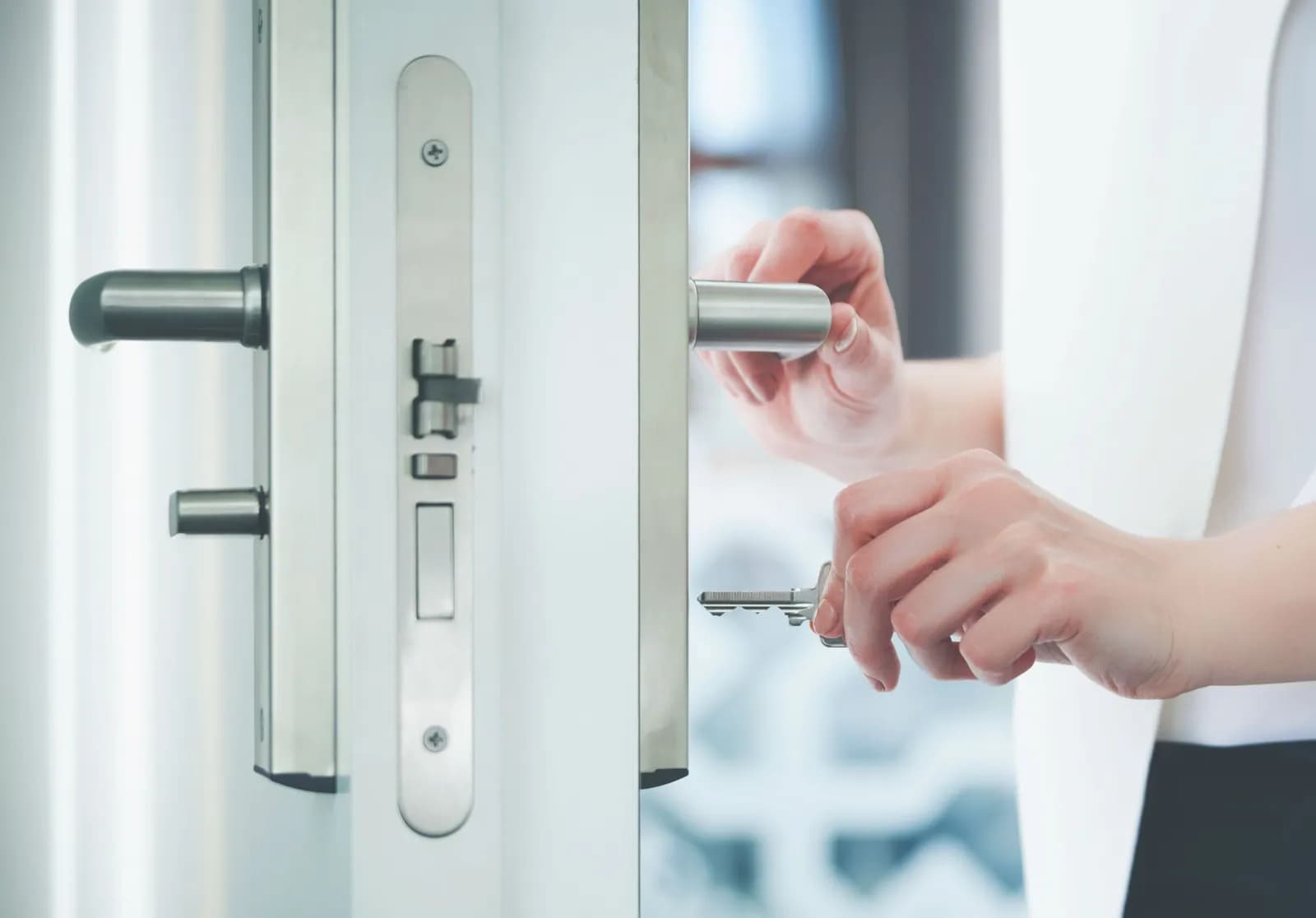
A master key system lets each person carry one key that opens the doors they need and no others, while a manager or caretaker carries one key that opens them all. It is the standard way to key an office, a plant, an apartment building or an institution, and it is one of our specialities. We plan, install and maintain master key systems across Kitchener, Waterloo and Cambridge.
How master keying works
Most commercial cylinders are pin tumbler locks. Inside, stacks of pins sit across the line where the plug turns. The right key lifts each stack so a gap lines up exactly with that shear line. In a master keyed cylinder, some stacks get an extra small pin, called a master pin, which creates a second gap. One key lines up the first gap; a different key lines up the second. Both turn the plug.
Stacked into levels, that gives the familiar hierarchy:
- Change key: opens one door, or a small set of doors keyed alike, such as one tenant’s suite.
- Master key: opens every door in a group: a floor, a department or a building.
- Grand master key: opens several groups, for a property manager or facilities lead.
- Great grand master: a further level for campuses and multi-building sites.
Designing the system
Good systems start on paper. Before a cylinder comes out, we work through who needs access to what: which staff need the server room, whether cleaners need offices or only common areas, which doors should stay off every master. The answers become a key schedule, a chart linking each door to the keys that open it. Each key gets a stamped code rather than a room name, so a lost key doesn’t advertise what it opens.
We also leave room to grow. A system pinned with no spare combinations runs out of options the first time a tenant splits a suite. Planning headroom at the start costs nothing; adding it later can mean rekeying everything.
Keyed alike is not the same thing
People sometimes ask for a master key when what they want is keyed alike: several locks that all take the same single key, with no hierarchy. That suits a small shop with a front and back door and two staff. Once some people should open some doors and not others, a true master key system is the better fit, because it lets you separate access without handing everyone a ring of keys.
The trade-off, honestly
Each master pin adds another way for a cylinder to turn. In a large, poorly planned system, that can produce keys that open doors they were never meant to, an effect locksmiths call cross-keying. Careful planning keeps the combinations controlled, and a restricted keyway keeps the keys themselves under control. For buildings where that matters, we build the system on Mul-T-Lock high-security cylinders, whose keys are cut only under our account.
New construction and renovations
On a new building, the trades need to get in long before the owner moves in. Construction keying gives them working keys during the build, then the permanent system takes over at handover so those construction keys stop working. We work with builders and owners on both stages, along with the hardware schedule for each door.
“We use Cote Lock extensively for both new construction and renovation keying work. They provide efficient, friendly service consistently and support our business well. I can enthusiastically recommend them!” (Steve D.)
Keeping a system healthy
A master key system is only as good as its records. Keep a list of who holds which key, collect keys when people leave, and when one goes missing, rekey the doors it opened rather than hoping. If a change key is lost, that is usually one cylinder. If a grand master is lost, it is a bigger conversation, which is why the top keys should be few and well kept. Our rekeying page covers what that work involves.
Taking over an older system
Many buildings run on a system set up decades ago by someone who is no longer around. If you have the original keys or paperwork, we can often decode what is there and extend it. If not, rekeying to a new, documented system usually costs less in the long run than patching a system nobody understands. For a closer look at levels, restricted keys and key control, read our guide to how master key systems work, or ask us for a quote on your building.
Questions people ask
Is a master key system less secure than giving every door its own key?
Slightly, in theory, because each master pin adds a way for the cylinder to turn. In practice, a well planned system with a restricted keyway is far easier to control than a ring of unrelated keys that people copy and lose track of.
What happens if someone loses a master key?
Every door that key opens should be rekeyed, which is why master and grand master keys should be issued to as few people as possible. Losing a single change key usually means changing only the cylinders it opened.
Can our existing locks be master keyed?
Often, yes. Many commercial locks can take new cylinders or be repinned into a master key system. Very old, worn or mixed-brand hardware may need some cylinders replaced so everything runs on one keyway.
How many levels does our building need?
Most small offices and multi-unit buildings need two levels: change keys and one master. Larger sites with departments or several buildings use a grand master level, and campuses sometimes go one further. We work it out from how the building is actually used.
Can tenants or staff copy their keys?
On a standard keyway, anyone with a key can have it copied. On a restricted Mul-T-Lock keyway, copies are made only through an authorized dealer, so the building controls who gets keys.